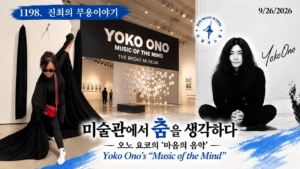
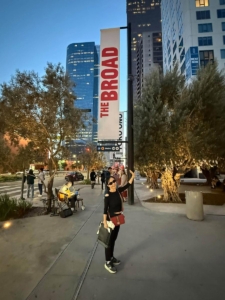
간다 간다 하면서도 미루고 있었다. 그러던 어느 날 운전 중 길가의 대형 광고판에서 오노 요코의 얼굴을 보았다. ‘아, 맞다. 오노 요코 전시!’ 더 브로드(The Broad) 웹사이트를 열어보니 지난 5월 시작한 《Yoko Ono: Music of the Mind》가 10월 11일이면 끝난다고 한다. “오 마이 갓, 얼마 안 남았네.” 그제야 서둘러 예약하고 LA 다운타운의 더 브로드 미술관을 찾았다.
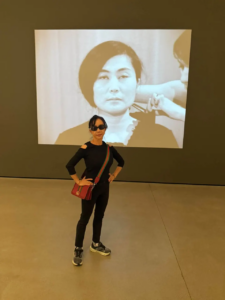
솔직히 내게도 오노 요코는 오랫동안 ‘존 레논의 아내’라는 이미지가 먼저였다. 비틀스를 해체시킨 여자라는 비난과 편견 속에 가려져 있었지만, 그녀는 존 레논을 만나기 훨씬 전부터 뉴욕 아방가르드 예술계에서 활동한 전위예술가였다. 1960년대 예술과 삶의 경계를 허물려 했던 플럭서스(Fluxus)의 예술가들과 교류하며 그 실험적 흐름에 함께했고, 존 케이지의 실험정신과도 가까이 있었다. 백남준 역시 같은 시대 예술의 경계를 넓혀가고 있었다.
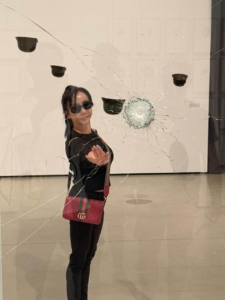
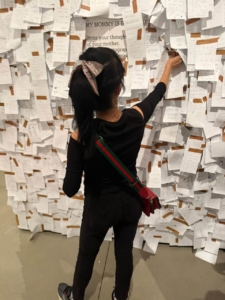
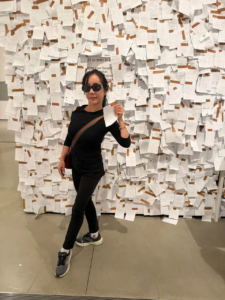
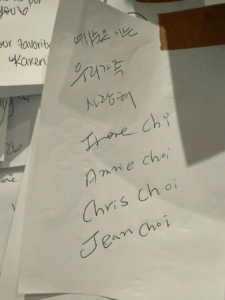
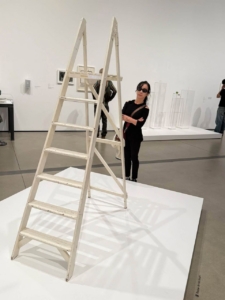
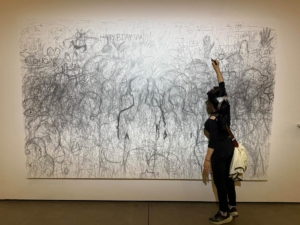
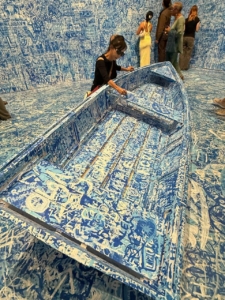
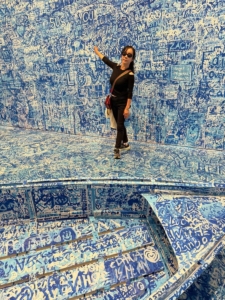
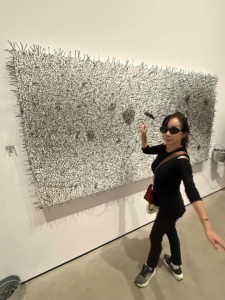
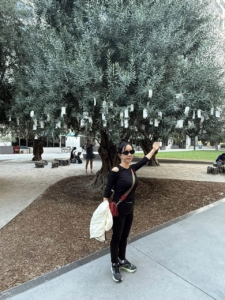
이번 전시는 보는 것만으로 끝나지 않았다. 나도 망치를 두드리고, 그림을 그리고, 작은 종이에 생각을 적어 벽에 붙였다. 내가 행동하는 순간 작품도 달라졌다. 예술가와 관객, 작품과 일상의 경계가 허물어지는 경험이었다.
1964년 〈컷 피스(Cut Piece)〉에서 오노 요코는 무대에 앉아 관객에게 가위를 건네 자신의 옷을 자르게 한다. 관객의 행동이 작품이 되는 동시에 불편한 질문을 던진다. 저항하지 않는 타인 앞에서 인간은 어디까지 갈 수 있는가? 호기심과 욕망은 언제 폭력이 되는가? 예술은 인간의 본성을 비추는 거울이 된다.
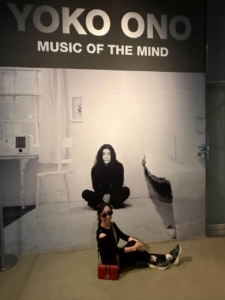
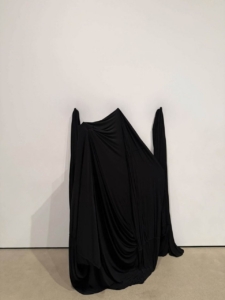
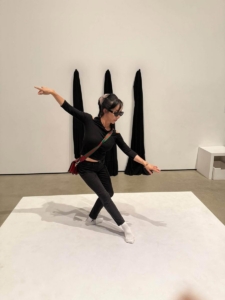
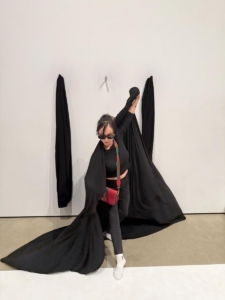
그러나 무용가인 나를 가장 오래 붙잡은 것은 〈백 피스(Bag Piece)〉였다. 커다란 검은 천 안으로 들어가 움직이는 작품이다. 사람들은 바라볼 뿐 선뜻 참여하지 않았다. 나는 보는 순간 그 안으로 들어가고 싶었다. 검은 천을 몸에 두르고 팔을 뻗고 몸을 기울였다. 얼굴도 의상도 몸의 선도 사라졌는데, 움직임과 존재는 오히려 더 선명해졌다. 어쩌면 그것이 오노 요코가 기다리던 관객의 응답이 아니었을까?
낯설고 멀게만 느껴졌던 개념예술이 검은 천 속에서 천천히 내게 다가왔다. 이해하려 애쓰지 않아도 몸이 먼저 느끼고 있었다. 예술은 설명이 아니라 경험이었고, 그 경험은 다시 사유가 되었다. 그제야 전시 제목 《Music of the Mind》, ‘마음의 음악’이라는 말이 내 안으로 들어왔다. 보이지 않는 마음에도 음악이 있고, 그것은 몸을 통해 움직임이 될 수 있다는 것.
그리고 그 순간, 오노 요코가 내게 묻는다. 몸이 보이지 않아도 춤출 수 있는가? 정해진 스텝이 없어도 춤이 될 수 있는가? 우리는 무엇을 보고 춤이라고 말하는가?
발레는 몸을 보여주는 예술이다. 발끝에서 손끝까지 아름다운 선을 만들기 위해 우리는 몸을 훈련한다. 그런데 오노 요코는 정반대로 몸을 감췄다. 보이는 몸의 형태가 사라지자 그 안에 존재하는 인간의 움직임과 현존은 오히려 더 또렷해졌다. 나는 그곳에서 ‘현상과 본질’을 생각했다.
춤은 아름다운 동작만을 보여주는 것이 아니다. 어린아이든 시니어든, 전문 무용수든 처음 춤추는 사람이든 몸으로 자신의 생각과 감정, 살아온 시간을 표현하는 순간 춤은 시작된다. 몸이 얼마나 아름답게 움직이는 가보다 그 몸이 무엇을 말하고 있는가? 어쩌면 춤의 미학은 완벽한 형식에 있는 것이 아니라, 보이지 않는 마음이 몸을 통해 드러나는 순간에 있는지도 모른다.
전시장을 나오며 《Music of the Mind》를 다시 떠올렸다. 나는 미술을 보러 갔지만 그곳에서 다시 춤을 만났다. 미술과 음악, 몸과 움직임은 서로 다른 언어처럼 보이지만 결국 인간의 마음을 표현한다는 한 지점에서 만난다. 예술은 그렇게 서로 다른 길을 걷다가 결국 하나의 본질로 통한다. 그래서 나는 오늘, 미술관에서 춤을 생각했다.
Thinking About Dance in a Museum — Yoko Ono’s “Music of the Mind”
I had been meaning to go for months, but somehow kept putting it off. Then one day, while driving, I saw Yoko Ono’s face on a large billboard by the road. “Oh, right—the Yoko Ono exhibition!” I immediately checked The Broad’s website and discovered that Yoko Ono: Music of the Mind, which had opened in May, would close on October 11. “Oh my God, there’s hardly any time left.” I quickly made a reservation and headed to The Broad in downtown Los Angeles.
To be honest, for a long time I thought of Yoko Ono primarily as “John Lennon’s wife.” She had been overshadowed by criticism and prejudice, even blamed for breaking up the Beatles. Yet long before she met Lennon, Ono was already an avant-garde artist active in New York’s experimental art scene. She moved alongside artists associated with Fluxus, the 1960s movement that sought to dissolve the boundaries between art and everyday life, and was close to the experimental spirit of John Cage. Nam June Paik, too, was expanding the boundaries of art during this remarkable period.
This was not an exhibition meant simply to be observed. I hammered, drew, and wrote my thoughts on small pieces of paper and attached them to a wall. The moment I acted, the work itself changed. The boundaries between artist and audience, artwork and everyday life, began to disappear.
In her 1964 work Cut Piece, Ono sat onstage and invited audience members to cut away pieces of her clothing with scissors. The audience’s actions became part of the artwork, but at the same time the work posed unsettling questions: How far will human beings go when faced with someone who does not resist? At what point do curiosity and desire become violence? Here, art becomes a mirror reflecting human nature.
But the work that held me longest as a dancer was Bag Piece. A person enters a large black cloth bag and moves inside it. People stood watching, hesitant to participate. The moment I saw it, however, I wanted to step inside. I wrapped myself in the black cloth, extended my arms, and leaned my body into movement. My face, clothing, and the lines of my body disappeared, yet somehow my movement—and my very presence—became even clearer. Perhaps this was the response Yoko Ono had been waiting for from her audience.
Conceptual art, which had always seemed distant and unfamiliar to me, slowly came closer inside that black cloth. I no longer had to struggle to understand it intellectually; my body understood first. Art was not an explanation but an experience, and that experience became contemplation. Only then did the title Music of the Mind truly enter me: perhaps even the invisible mind has its own music, and through the body, that music can become movement.
And at that moment, Yoko Ono seemed to ask me: Can there be dance when the body cannot be seen? Can it still be dance without prescribed steps? What is it that makes us call something dance?
Ballet is an art that reveals the body. We train our bodies to create beautiful lines from the tips of our toes to the ends of our fingers. Ono, however, did the opposite: she concealed the body. Once its visible form disappeared, the movement and presence of the human being within became even more distinct. There, I found myself thinking about appearance and essence.
Dance is not simply the display of beautiful movement. Whether a child or a senior, a professional dancer or someone dancing for the first time, dance begins when a person expresses thoughts, emotions, and a lifetime of experience through the body. What matters is not only how beautifully the body moves, but what that body has to say. Perhaps the aesthetics of dance lie not in perfect form, but in the moment when an invisible inner world becomes visible through the body.
As I left the museum, I thought again about the title Music of the Mind. I had gone there to see visual art, but there I encountered dance once again. Art, music, the body, and movement may seem to speak different languages, yet they meet at the same point: the expression of the human spirit. Art may travel along different paths, but ultimately those paths lead toward the same essence. And so today, in a museum, I found myself thinking about dance.
- koadance.org
- balletjean.com
- 한미무용연합진발레스쿨
- 3727 West. 6th Street #607. LA CA 90020
- Tel: 323-428-4429
#진최의무용이야기 #한미무용연합 #진발레스쿨 #오노요코 #미술관에서춤을생각하다
#JeanChoisDanceStory #KOADanceFederation #JeanBalletSchool #YokoOno #MusicOfTheMind