춤은 몸으로 쓰는 철학이라고 생각한다. 아름다운 선과 균형, 절제와 여백을 통해 인간의 감정과 세계를 드러내는 예술이다. 특히 한국무용에는 호흡과 곡선, 멈춤과 흐름 속에서 피어나는 고유한 미학이 있다.
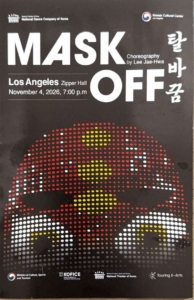
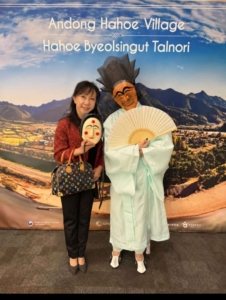
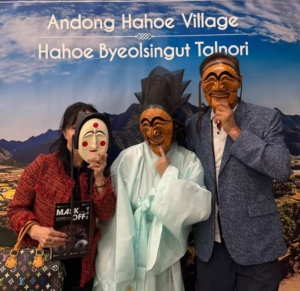
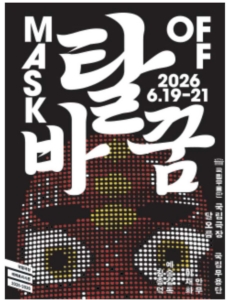
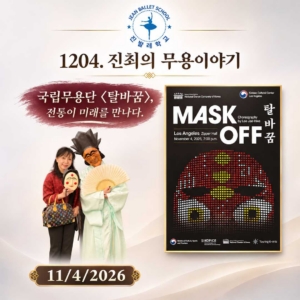
지난 수요일, 주LA한국문화원 주최로 콜번 스쿨 지퍼홀에서 국립무용단의 (탈바꿈, MASK OFF) 공연이 열렸다. 한국 전통의 ‘탈’을 오늘의 감각과 기술로 새롭게 해석한 작품이라 공연 전부터 기대가 컸다. 나는 한미무용연합회와 진발레스쿨 식구들, 주변 사람들에게도 꼭 보라고 여러 차례 알렸다. 좋은 공연의 울림을 함께 나누고 싶었기 때문이다.
공연이 시작되자 나는 자연스럽게 우리가 익히 알고 있는 전통 탈춤을 떠올렸다. 그러나 막이 오르는 순간, 그 익숙한 탈춤의 세계는 전혀 예상하지 못한 방향으로 뒤집혔다.
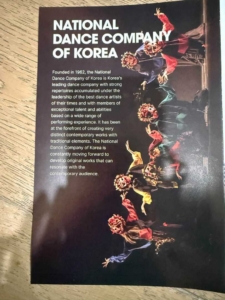
1962년 창단한 국립무용단은 전통을 계승하면서도 오늘의 감각으로 새로운 한국춤을 만들어온 대표 무용단이다. 안무가 이재화는 앞서 (가무악칠채)에서 농악의 칠채 장단을 현대적으로 풀어냈다. 지난해 주LA한국문화원의 ‘공연예술 콘텐츠 상영회 국립극장 시리즈’를 통해 아리홀에서 이 작품을 영상으로 감상한 적이 있어 이번 무대가 더욱 반갑게 다가왔다.
이재화의 유튜브 인터뷰에서 인상적이었던 것은 창작에 대한 끊임없는 의심이었다. 무용수는 자신의 몸을 책임지지만, 안무가는 무대 전체의 흐름을 바라보고 선택해야 한다. 스스로 묻고, 의심하고, 수정하고, 다시 선택하는 과정. 어쩌면 좋은 안무는 정답을 재현하는 것이 아니라 질문 속에서 새로운 답을 찾아가는 예술인지도 모른다.
무대 위 일곱 명의 무용수들은 마치 자유롭게 노는 듯했다. 뛰고, 웅크리고, 몸을 뒤틀고, 소리를 지른다. 그러나 그 자유로움 속에는 놀라운 정제와 절제가 있었다. 무질서처럼 보이는 순간에도 치밀한 질서가 살아 있었다.
심장박동처럼 반복되는 소리가 무대를 두드렸다. 어둠 속에서 탈의 얼굴은 빛을 따라 끊임없이 변했고, 무용수들의 몸은 인간인지 다른 존재인지 알 수 없을 만큼 낯설게 뒤틀렸다. 그런데 그 기괴한 움직임이 절정에 이르는 순간, 한 무용수의 손끝에서 너무나 아름다운 한국춤의 선이 흘러나왔다.
그 순간 내가 알고 있던 아름다움의 기준이 흔들렸다. 추한 것과 아름다운 것, 전통과 현대, 인간과 가면 사이의 경계가 흐려지고 있었다.
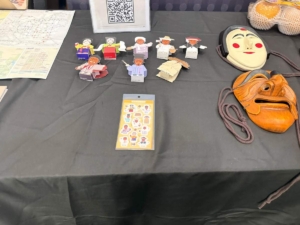
전통 탈의 형상은 LED와 디지털 기술을 통해 계속 다른 얼굴로 변해갔다. 과거의 탈이 현재의 기술을 만나 미래를 향해 변형되는 모습은 그 자체로 ‘탈바꿈’이었다. 전통 역시 고정된 형식이 아니라 끊임없이 재창조되고 변형되는 살아 있는 미학처럼 느껴졌다.
탈은 겉으로 보면 우습고 해학적이지만, 그 웃음 뒤에는 슬픔과 억압, 풍자와 저항이 숨어 있다. 견디고 넘어가며 결국 이겨내는 인간의 정서가 그 안에 있다.
여기에서 칼 융의 ‘페르소나(Persona)’가 떠올랐다. 페르소나는 원래 배우가 쓰던 가면을 뜻한다. 우리는 사회 속에서 여러 얼굴을 쓰며 살아간다. 그러나 (탈바꿈)에서는 오히려 가면을 썼을 때 인간이 더 자유로워진다. 얼굴이 감춰지는 순간 평소 드러내지 못했던 몸짓과 감정이 터져 나온다.
가면은 나를 숨기면서 동시에 나를 해방한다. 그렇다면 어느 쪽이 진짜 나인가? 가면을 벗은 나인가? 아니면 가면 뒤에서 드러난 본능과 욕망 역시 나인가?
(탈바꿈)은 춤의 아름다움에도 질문을 던진다. 춤은 반드시 아름다워야 하는가? 반듯하고 우아한 움직임만이 춤인가? 이 작품에서는 뒤틀린 몸도 춤이 되고, 비명과 거친 숨도 리듬이 된다. 추한 것이 아름다워지고, 섬뜩함과 경이로움이 겹쳐지는 순간 우리는 미와 추의 경계를 넘어선 또 다른 미학과 마주한다. 그 압도감은 때로 ‘숭고’라는 말에 가까웠다.
무엇보다 인상적인 것은 안무의 독창성이었다. 전통 탈춤을 그대로 복원한 것도, 서양 현대무용의 형식을 답습한 것도 아니다. 탈춤 속 해학과 저항, 호흡과 생명력을 오늘의 몸과 기술로 다시 태어나게 했다.
전통을 지킨다는 것은 과거의 모양을 반복하는 것이 아니다. 그 안에 살아 있는 정신을 오늘의 언어로 다시 해석하고, 재창조하고, 미래로 이어가는 일이다.
K-팝, K-푸드, K-뷰티가 세계를 사로잡고 있는 지금, 한국춤 역시 우리만의 깊은 뿌리를 바탕으로 독창적이고 철학적인 예술언어로 세계와 만날 수 있다는 사실이 자랑스러웠다.
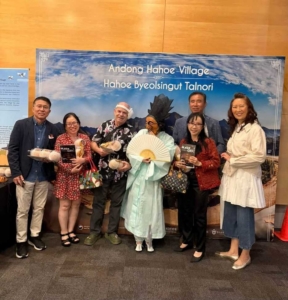
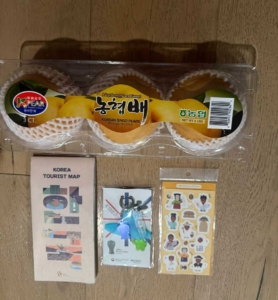
이번 공연을 마련한 주LA한국문화원에도 감사한다. 문화원은 다양한 프로그램을 통해 LA 시민들이 한국문화를 가까이 접할 기회를 넓혀가고 있으며, 이날도 공연 후 관객 전원에게 한국 배와 선물을 나누어 주어 세심한 배려가 느껴졌다.
(탈바꿈)은 결국 탈에 관한 작품이면서 인간에 관한 작품이었다. 우리는 어떤 가면을 쓰고 살아가는가? 그리고 그 가면을 벗었을 때 나는 누구인가?
그날 밤 무대에서 탈바꿈한 것은 전통춤만이 아니었다. 춤을 바라보던 나의 시선 또한 함께 탈바꿈하고 있었다.
I believe dance is philosophy written through the body. Through the beauty of line and balance, restraint and space, it gives form to human emotion and the world we inhabit. Korean dance, in particular, possesses a distinctive aesthetic that unfolds through breath and curve, stillness and flow.
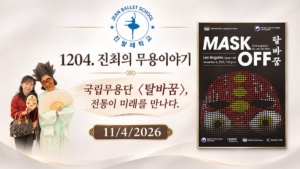
Last Wednesday, the Korean Cultural Center, Los Angeles, presented the National Dance Company of Korea’s MASK OFF at the Colburn School’s Zipper Hall. The promise of a work that reinterprets the traditional Korean mask through contemporary sensibilities and technology had stirred my anticipation. I had encouraged members of the KOA Dance Federation, our Jean Ballet School community, and friends to attend. I wanted us to share the resonance of a meaningful performance.
I had naturally imagined the familiar world of traditional Korean mask dance. Yet the moment the curtain rose, that familiar world turned in a direction I could never have anticipated.
Founded in 1962, the National Dance Company of Korea has carried forward the traditions of Korean dance while continually reimagining them for the present. Choreographer Lee Jae-Hwa had previously explored the chilchae rhythmic patterns of nongak, Korean farmers’ music, through a contemporary lens in Gamuak Chilchae. Having watched that work at Ari Hall last year through the Korean Cultural Center’s National Theater of Korea screening series, I felt a particular sense of anticipation for this performance.
What stayed with me from Lee’s YouTube interview was the persistent questioning at the heart of his creative process. A dancer is responsible for their own body, while a choreographer must consider the movement of the entire stage and make choices within it. To question, to doubt, to revise, and to choose again—perhaps good choreography is less about reproducing an established answer than discovering new possibilities through inquiry.
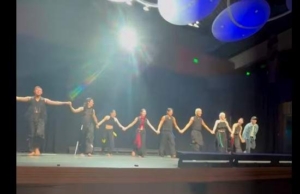
The seven dancers onstage seemed to be playing freely. They leaped, crouched, twisted their bodies, and cried out. Yet within that apparent freedom lay remarkable refinement and restraint. Even in moments that seemed chaotic, a meticulous order remained alive.
A recurring sound, like a heartbeat, pulsed across the stage. In the darkness, the faces of the masks shifted with the light, while the dancers contorted their bodies into forms so unfamiliar that they seemed to hover between the human and something other. Then, at the height of those unsettling movements, an exquisitely beautiful line of Korean dance flowed from a dancer’s fingertips.
In that instant, my understanding of beauty began to shift. The boundaries between ugliness and beauty, tradition and modernity, the human being and the mask were becoming uncertain.
Through LED and digital technology, the forms of traditional masks continually took on different faces. Watching a mask from the past encounter the technology of the present and transform toward the future was to witness talbakkum—transformation—itself. Tradition felt like a living aesthetic, continually recreated and reshaped.
Traditional masks may appear comic and playful, but behind their laughter lie sorrow and oppression, satire and resistance. They hold the emotions of human beings who endure, persevere, and ultimately overcome.
Here, I was reminded of Carl Jung’s concept of the persona. The word originally referred to the mask worn by an actor. We, too, move through society wearing different faces. In MASK OFF, however, putting on a mask seems to make the human being freer. As the face disappears from view, gestures and emotions ordinarily held in check burst forth.
The mask conceals me, yet it also liberates me. Which, then, is my true self? The self revealed when the mask is removed? Or are the instincts and desires that emerge behind it equally a part of who I am?
MASK OFF also questions the nature of beauty in dance. Must dance always be beautiful? Do only graceful, harmonious movements deserve to be called dance? Here, a contorted body becomes dance, while cries and ragged breath become rhythm. In moments when ugliness becomes beautiful and unease meets wonder, we encounter an aesthetic beyond the familiar divide between beauty and ugliness. At times, its overwhelming power approached what we call the sublime.
Above all, I was struck by the originality of the choreography. It neither reconstructed traditional mask dance nor imitated the conventions of Western contemporary dance. Instead, it gave renewed life to the humor and resistance, breath and vitality within Korean mask dance through the bodies and technology of our own time.
To preserve tradition is to do more than repeat the forms of the past. It is to reinterpret the spirit living within them, to recreate that spirit in the language of the present, and to carry it into the future.
At a time when K-pop, Korean food, and Korean beauty are captivating audiences around the world, I felt proud to see that Korean dance, too, can meet the world through an original and philosophical artistic language grounded in its own deep roots.
I am also grateful to the Korean Cultural Center, Los Angeles, for bringing this performance to our community. Through its varied programs, the center continues to create opportunities for Angelenos to experience Korean culture firsthand. That evening, its thoughtful hospitality extended beyond the stage: every audience member received Korean pears and gifts after the performance.
Ultimately, MASK OFF was a work about masks and about being human. What masks do we wear as we move through life? And when I remove mine, who am I?
That night, traditional dance was not alone in undergoing a transformation. My own way of seeing dance was transformed alongside it.
- koadance.org
- balletjean.com
- 한미무용연합진발레스쿨
- 3727 West. 6th Street #607. LA CA 90020
- Tel: 323-428-4429
#한미무용연합회 #진발레스쿨 #진최의무용이야기 #국립무용단 #탈바꿈 #한국무용
#KOADanceFederation #JeanBalletSchool #JeansDanceStory #NationalDanceCompanyOfKorea #MaskOff #KoreanDance