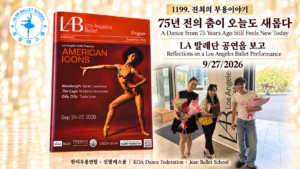
75년 전의 춤이 오늘도 새롭다 — LA 발레단 공연을 보고..
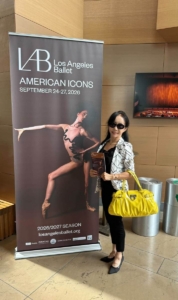
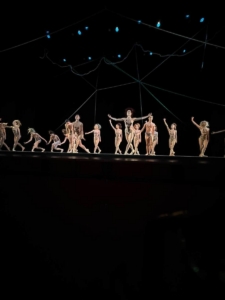
춤에도 나이가 있을까? 오래전에 만들어진 춤은 오래된 춤이고, 오늘 만들어진 춤만 새로운 춤일까? 지난 주말 LA 발레단의 (아메리칸 아이콘스, American Icons)를 보며 이런 생각이 들었다.
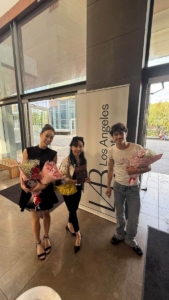
세계 여러 도시에는 저마다 자랑하는 발레단이 있다. LA에 사는 나에게 LA 발레단의 무대는 익숙한 일상에 새로운 감각을 더해준다. 2004년 창단한 이 발레단은 클래식부터 네오클래식, 컨템포러리 발레까지 다양한 작품을 선보이며 관객들과 만나왔다. 개인적인 인연도 있다. 발레단의 유일한 한인 무용수인 예술리 정 선생님과 제이콥 선생님이 진발레스쿨에서도 학생들을 지도하고 있으며, 지난해에는 우리 학생 에린도 (호두까기 인형) 아동 오디션에 합격해 무대에 섰다.
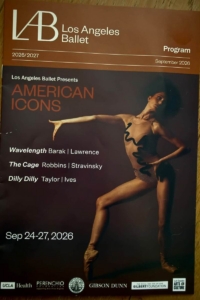
이번 공연은 2026년 미국 건국 250주년을 기념해 미국 무용과 음악의 흐름을 이끈 예술가들을 조명한 무대다. 미국 무용사의 거장 제롬 로빈스와 폴 테일러, 오늘의 LA 발레단을 이끄는 멜리사 바락까지. 서로 다른 시대를 대표하는 안무가들의 작품을 한자리에서 만나니 ‘아메리칸 아이콘스’라는 제목의 의미가 자연스럽게 다가왔다.
첫 작품은 멜리사 바락의 (웨이브렝스, Wavelength)였다. 지난 1월 베벌리힐스에서 처음 보았을 때보다 무용수들의 호흡과 앙상블이 한층 깊어 보였다. 작품도 무대에 오를 때마다 무용수와 함께 성장한다는 생각이 들었다.
가장 강렬했던 것은 두 번째 작품, 제롬 로빈스의 (더 케이지, The Cage)였다. 음악이 스트라빈스키의 (현악 오케스트라를 위한 협주곡 D조)라는 것을 알고, 피나 바우쉬의 (봄의 제전) 공연을 보았던 강렬한 기억이 가장 먼저 떠올랐다. 서로 다른 곡이지만, 스트라빈스키라는 이름만으로도 긴장감을 예감했다. 무대가 시작되자 그 예감은 맞아떨어졌다.
여성 무용수들은 곤충 같은 생명체로 변해 있었다. 날카로운 손끝과 뒤틀리는 등, 주역 무용수의 표정과 몸짓은 섬뜩할 만큼 생생했다. 아름다움은 고운 선에만 있는 것이 아니었다. 낯설고 불편한 움직임에도 눈을 뗄 수 없게 하는 힘이 있었다.
더욱 놀라운 것은 1951년에 초연된 작품이라는 사실이다. 무려 75년 전이다. 그런데도 오늘 만들어진 것처럼 새롭고 파격적이었다. ‘75년 전에 어떻게 이런 발레를 생각했을까?’ 감탄했다. 그 무대에 예술리 정 선생님이 함께하는 기쁨도 컸다.
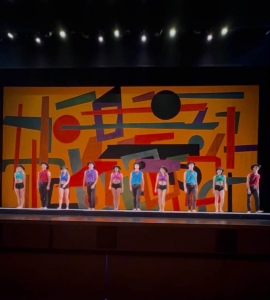
마지막 폴 테일러의 (딜리 딜리, Dilly Dilly)는 미국 민요와 유머러스한 움직임으로 웃음을 선사했다. 대학에서 발레를 전공하던 시절, 현대무용의 거장으로 배웠던 폴 테일러. 그가 세상을 떠난 뒤에도 그의 춤은 젊은 무용수들의 몸에서 살아 움직이고 있었다.
니체는 몸을 ‘커다란 이성’이라 불렀다. 그 말을 떠올리면 춤은 몸으로 생각하고 세상을 느끼는 예술이다. 같은 노래도 살아온 시간에 따라 다르게 들리듯, 오래된 춤도 오늘의 몸과 시선을 만나 새로운 의미를 얻는다.
그렇다면 춤의 나이는 무엇으로 정해지는 것일까? 작품이 처음 태어난 시간일까? 오늘 그것을 다시 살아내는 무용수의 몸일까? 아니면 그 춤을 바라보는 우리의 시선일까?
A Dance from 75 Years Ago Still Feels New Today — Reflections on Los Angeles Ballet
Does dance have an age? Is a dance created long ago an old dance, and is only a dance created today truly new? These questions came to mind last weekend as I watched Los Angeles Ballet’s American Icons.
Cities around the world have ballet companies they take pride in. As someone who lives in LA, I find that Los Angeles Ballet’s performances bring fresh perspectives to the familiar rhythms of everyday life. Founded in 2004, the company has connected with audiences through a varied repertoire spanning classical, neoclassical, and contemporary ballet. I also have a personal connection to the company. Ashley Jung, its only Korean dancer, and Jacob both teach students at Jean Ballet School. Last year, our student Erin also passed the children’s audition for The Nutcracker and appeared in the production.
This program celebrated the 250th anniversary of American independence in 2026, highlighting artists who helped shape American dance and music. It brought together works by Jerome Robbins and Paul Taylor, two towering figures in American dance, and Melissa Barak, who leads Los Angeles Ballet today. Seeing works by choreographers representing different generations together on one stage, I felt the meaning of the title American Icons come naturally into focus.
The opening work was Melissa Barak’s Wavelength. Compared with when I first saw it in Beverly Hills this past January, the dancers seemed more deeply attuned to one another, their ensemble work more cohesive. It made me think that a work, too, grows alongside its dancers each time it returns to the stage.
The most powerful impression came from the second work, Jerome Robbins’s The Cage. When I learned that the music was Stravinsky’s Concerto in D for String Orchestra, my first thought was of the unforgettable intensity of watching Pina Bausch’s The Rite of Spring. Though they are different compositions, Stravinsky’s name alone made me anticipate a sense of tension. As the performance began, that anticipation proved well founded.
The female dancers had transformed into insectlike creatures. Their sharp fingertips, contorted backs, and the lead dancer’s expressions and gestures were unsettlingly vivid. Beauty did not reside only in graceful lines. Even unfamiliar, uncomfortable movements possessed a power that made it impossible to look away.
What astonished me even more was that the work premiered in 1951—75 years ago. Yet it felt as fresh and daring as something created today. “How could anyone have imagined a ballet like this 75 years ago?” I wondered in admiration. There was also great joy in seeing Ashley Jung take part in that performance.
The final work, Paul Taylor’s Dilly Dilly, brought laughter through American folk songs and humorous movement. When I was majoring in ballet in college, I studied Taylor as one of the great masters of modern dance. Even after his passing, his dance was still alive, moving through the bodies of young dancers.
Nietzsche called the body “a great reason.” His words remind me that dance is an art through which we think with our bodies and feel the world. Just as the same song can sound different depending on the life we have lived, an old dance gains new meaning when it meets the bodies and perspectives of today.
What, then, determines the age of a dance? Is it the moment the work first came into being? The bodies of the dancers who bring it to life again today? Or the way we see it?

-
- koadance.org
- balletjean.com
- 한미무용연합진발레스쿨
- 3727 West. 6th Street #607. LA CA 90020
- Tel: 323-428-4429
#한미무용연합 #진발레스쿨 #진채의무용이야기 #LA발레단 #아메리칸아이콘스
#KOADanceFederation #JeanBalletSchool #JeanChoiDanceStories #LosAngelesBallet #AmericanIcons