The Usefulness of Useless Art
Reflections on the Jerome Robbins Ballet Festival
“Mom, why do you go to so much trouble to visit museums so often? Can’t you see everything in photographs, online, or on YouTube?”
An art history teacher at KAWA once shared this question her son had asked her. In reply, she spoke of the emotional power of encountering art in person and told him Zhuangzi’s story of the “useless tree.” Last weekend, watching the ballets of Jerome Robbins, I found myself returning to her words.
Robbins, who directed and choreographed West Side Story and Fiddler on the Roof, was a towering figure who helped lead New York City Ballet alongside George Balanchine. Although I had studied Balanchine’s neoclassicism as a student, I had never had the opportunity to see Robbins’s ballets in person. His work had long stirred my curiosity. Here, at last, was a chance to encounter the choreographic imagination that moved so freely between musical theater and ballet.
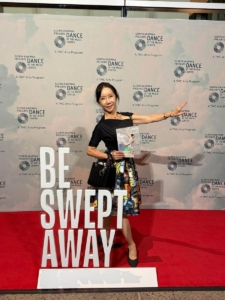
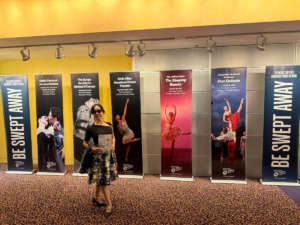
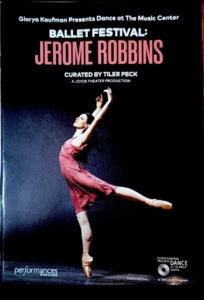
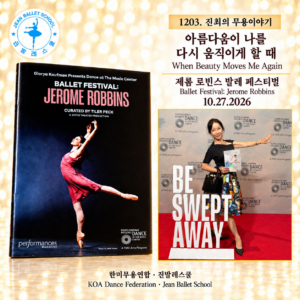
Presented at Los Angeles’s Ahmanson Theatre, the festival honored Robbins’s life and artistic legacy. Produced by The Joyce Theater and presented by The Music Center, with a program curated by Tiler Peck, it brought together outstanding principal dancers from several ballet companies. There was something wondrous in the thought that, long after an artist’s life has ended, his dances can continue to breathe through the bodies of others.
In the opening work, In the Night, three couples danced to Chopin’s nocturnes, performed live on the piano. As their bodies traced the many shades of love, memories and emotions from my own life began to mingle with theirs. Tears slipped down my face before I realized I was crying. Somewhere along the way, I had begun to dance with them in my heart.
As a ballet teacher, I could also see the labor that sustained such beauty. How many years of training had made that movement appear so effortless? Within a fleeting gesture lay the long, patient years of a dancer’s life.
The second work, A Suite of Dances, featured Tiler Peck in a ballet originally created for Mikhail Baryshnikov. Watching her, I recalled his dancing in the film White Nights. The first woman to perform this work, Peck honored the original choreography while bringing to it the distinct color of her own personality and expression. It was a conversation between Bach’s music for unaccompanied cello and a single dancing body.
In the final work, Dances at a Gathering, dancers came together and drifted apart, filling the stage with their encounters. Following their movements, I lost all sense of passing time. I thought of Stendhal syndrome—the physical response that can accompany an overwhelming encounter with beauty. In those breathlessly moving moments, I became acutely aware that I was alive, and capable of feeling so deeply.
There was no need for monumental scenery or dazzling projections. A piano, a cello, and the human body were enough. The performance drew its power entirely from the dancers’ finely honed technique and delicate expressiveness. It brought to mind the restraint of neoclassical ballet and the simplicity of minimalism. The more that was stripped away, the more deeply a small movement or a brief pause could reach me.
One moment near the end remains especially vivid: the dancers slowly directing their gaze toward the audience—to the right, the center, and the left. They did nothing more than look at us, yet my heart seemed to stand still. I thought of John Cage’s 4′33″. Just as a performer’s silence invites us to hear the sounds around us, that stillness made the breath onstage and the audience’s quiet anticipation newly perceptible. I, too, had become part of the performance.
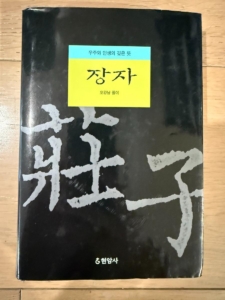
Zhuangzi’s tree, which I had encountered long ago in a book club, returned to me. Judged unsuitable for timber, it escaped the axe and was allowed to grow old. Its very uselessness had preserved its life. Here was the “usefulness of the useless.” What the world considers useful is not the measure of a thing’s worth. The time we spend in the presence of beauty may yield no immediate, measurable result, yet something within us is being kept alive.
I had told the members of my Silver Ballet class that audience members aged sixty-five and older could purchase rush tickets at the theater for twenty-five dollars, subject to availability. One member who attended later told me how happy the performance had made them, and how much they wanted to return to dancing with renewed dedication. It brought me joy to know that a small piece of news I had shared had become a source of inspiration in someone else’s life.
If asked why I go to see a performance in person, I would like to answer with the tears I shed that evening. After dwelling for a while in the presence of beauty, I find the heart to teach, to create, and to live anew. That time, whose worth cannot be fully measured by the world’s idea of usefulness, sets me in motion again.
쓸모없는 예술의 쓸모― ‘제롬 로빈스 발레 페스티벌’을 보고
“엄마는 왜 힘들게 미술관에 그렇게 자주 가? 사진이나 인터넷, 유튜브로도 다 볼 수 있잖아.”
카와(KAWA) 미술사 선생님께서 아들에게 이런 질문을 받았다고 하셨다. 선생님은 현장에서 느끼는 감동과 장자의 ‘쓸모없는 나무’ 이야기를 들려주셨다. 지난 주말, 제롬 로빈스의 발레를 보며 그 말씀을 다시 생각했다.
제롬 로빈스는 뮤지컬 (웨스트 사이드 스토리)와 (지붕 위의 바이올린)의 연출과 안무를 맡았으며, 조지 발란신과 함께 뉴욕시티발레단을 이끈 거장이다. 학창 시절 발란신의 신고전주의를 공부했지만, 로빈스의 발레 작품은 직접 볼 기회가 없어 늘 궁금했다. 뮤지컬과 발레를 넘나든 그의 안무 세계를 이번 무대에서 만나보고 싶었다.
LA 아만슨 극장에서 열린 이번 페스티벌은 로빈스의 삶과 예술적 유산을 기리는 무대였다. 조이스 극장이 제작하고 LA 뮤직센터가 선보였으며, 타일러 펙의 프로그램 구성으로 여러 발레단의 최고의 수석무용수들이 함께했다. 한 예술가의 생애가 끝난 뒤에도 그의 춤이 다른 이들의 몸을 통해 살아 숨 쉰다는 사실이 경이로웠다.
첫 작품 인 더 나이트(In the Night) 에서는 쇼팽의 녹턴이 피아노 실황 연주로 흐르는 가운데 세 쌍의 무용수가 춤을 추었다. 병약한 쇼팽과 조르주상드와 사랑,그 안에 깃든 그들의 고뇌를 알기에 몸으로 그려내는 사랑은 내가 지나온 시간과 감정이 오버랩되면서 눈물이 나도 모르게 흘러 내렸다. 어느새 나는 마음으로 그들과 함께 춤추고 있었다. 발레를 가르치는 내게는 그 아름다움을 떠받치는 노력도 보였다.
발레를 가르치는 내게는 그 아름다움을 떠받치는 노력도 보였다. 저 동작을 저토록 가볍게 해내기까지 얼마나 많은 훈련이 필요했을까? 순간의 움직임 안에 한 사람의 긴 세월이 담겨 있었다.
두 번째 어 스위트 오브 댄시스(A Suite of Dances) 에서는 바리시니코프를 위해 만들어진 춤을 타일러 펙이 추었다. 영화 (백야)에서 보았던 바리시니코프의 춤이 떠올랐다. 이 작품을 여성 최초로 춘 펙은 원래의 안무를 지키면서도 자신만의 개성과 표현으로 새로운 빛깔을 더했다. 바흐의 무반주 첼로 음악과 한 사람의 몸이 나누는 대화였다.
마지막 댄시스 앳 어 개더링(Dances at a Gathering)에서는 무용수들이 만나고 흩어지며 무대를 채웠다. 그들의 움직임을 따라가다 시간의 흐름마저 잊었다. 예술에 압도되어 몸까지 반응한다는 ‘스탕달 신드롬’이 떠올랐다. 숨이 막히도록 벅찬 순간, 내가 살아서 느끼고 있다는 사실이 선명 해졌다.
거대한 장치나 현란한 영상 없이 피아노와 첼로, 사람의 몸만으로 충분했다. 오직 무용수의 고도로 연마된 테크닉과 섬세한 표현력만으로 승부를 거는 무대였다. 신고전주의 발레의 절제미와 미니멀리즘의 단순함이 떠올랐다. 덜어낼수록 작은 움직임과 잠깐의 멈춤이 깊이 다가왔다.
특히 마지막에 무용수들이 오른쪽과 중앙, 왼쪽으로 천천히 객석을 바라보던 순간을 잊을 수 없다. 그저 우리를 바라볼 뿐인데 마음이 얼어붙는 듯했다. 존 케이지의 (4분 33초)가 떠올랐다. 연주자가 소리를 내지 않을 때 주변의 소리에 귀 기울이게 되듯, 그 정적 속에서 무대의 숨과 객석의 기다림이 또렷해졌다. 나도 공연의 일부가 되어 있었다.
오래전 독서 모임에서 읽었던 장자의 나무도 다시 떠올랐다. 재목으로 쓸모없다고 여겨진 나무는 바로 그 이유로 베이지 않고 오래 살아남을 수 있었다. ‘무용지용’, 쓸모없음의 쓸모였다. 세상이 매기는 쓸모와 존재의 가치는 같지 않았다. 아름다움 앞에 머무는 시간도 당장의 성과로 설명할 수는 없지만, 내 안의 무언가를 살리고 있었다.
65세 이상 시니어는 잔여석이 있을 경우 현장에서 25달러에 러시 티켓을 살 수 있다는 소식을 실버 발레 회원들에게 알려주었다. 공연을 다녀온 한 회원은 무척 행복했고, 다시 열심히 춤추고 싶어 졌다고 했다. 내가 건넨 작은 소식이 누군가의 삶에 감동으로 이어졌다는 사실이 기뻤다.
왜 직접 공연장에 가느냐는 질문에 나는 그날의 눈물로 답하고 싶다. 아름다움 앞에 잠시 머문 뒤, 다시 가르치고 만들며 살아갈 마음을 얻기 때문이다. 세상의 쓸모로 다 헤아릴 수 없는 그 시간이 나를 다시 움직이게 한다.
- koadance.org
- balletjean.com
- 한미무용연합진발레스쿨
- 3727 West. 6th Street #607. LA CA 90020
- Tel: 323-428-4429
- #한미무용연합회 #진발레스쿨 #진최의무용이야기 #제롬로빈스발레페스티벌
- #KOADanceFederation #JeanBalletSchool #JeanChoiDanceStories #JeromeRobbinsBalletFestival