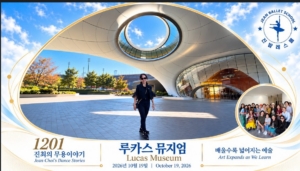
“가랑비에 옷 젖는 줄 모른다.” KAWA(한미여성회) 서양미술사 선생님께서 자주 하시는 말씀이다. 오랜 시간 가랑비를 맞다 보면 어느새 옷이 흠뻑 젖듯이 배움도 그렇다. 10년 넘게 미술사를 공부하며 한 작품, 한 화가를 알아가던 시간이 쌓여 어느새 우리도 예술이라는 가랑비에 흠뻑 젖어 있었다.
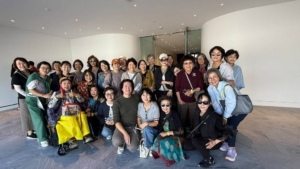
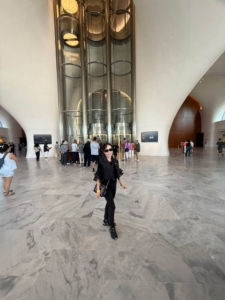
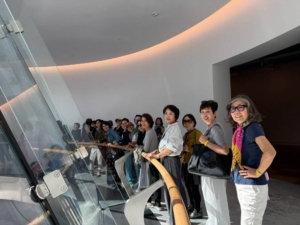
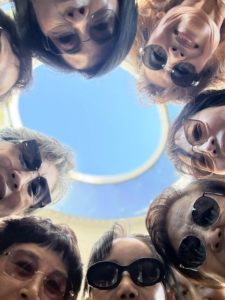
지난주 카와 서양미술사 클래스 회원 27명과 함께 LA에 새롭게 문을 연 루카스 뮤지엄을 방문했다. 회원들은 10년 이상 미술사를 공부하며 서양미술의 흐름과 수많은 작품을 익혀 온 지적인 분들이다. 이제는 웬만한 작품 앞에서 작가와 시대적 배경을 자연스럽게 이야기하는 베테랑 감상자들이다. LA에 흥미로운 미술관이 생겼다는 소식에 모두의 기대가 컸다. 같은 관심사를 가진 사람들과의 나들이라서일까? 나는 발레 수업까지 캔슬하고 동행했다. 소풍을 떠나는 아이처럼 마음이 설레었다.
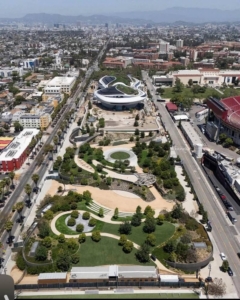
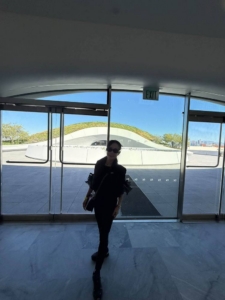
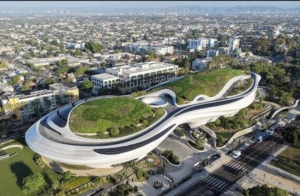
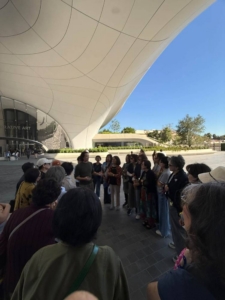
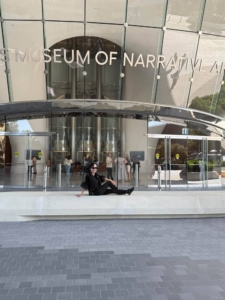
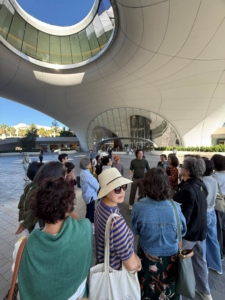
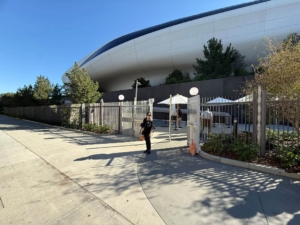
영화 스타워즈의 창시자 조지 루카스가 설립한 미술관이라기에 영화 관련 전시가 중심일 것이라 생각했다. 그러나 도착하는 순간 예상은 빗나갔다. 거대한 우주선이 내려앉은 듯한 건물 자체가 하나의 예술 작품이었다.
유려한 곡선을 바라보니 서울의 동대문디자인플라자 DDP가 떠올랐다. 루카스 뮤지엄을 설계한 중국 출신 건축가 마옌쑹은 DDP를 설계한 자하 하디드에게 배웠고 그녀의 건축사무소에서 근무했다. 관람 전 설계팀에서 함께 일했던 건축가 에드윈 조가 직접 건축물을 설명해 주었다. 그가 우리 회원의 아들이라는 사실도 특별한 인연으로 다가왔다.
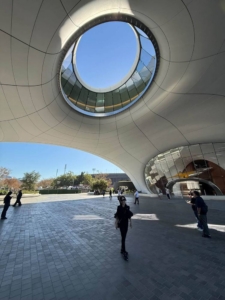
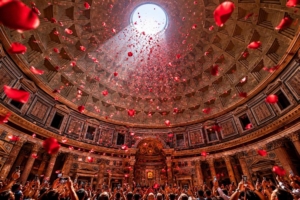
특히 건물 중앙의 천장이 뻥 뚫린 공간이 인상적이었다. 미술사 선생님의 설명을 통해 고대 로마 판테온(Pantheon)의 돔 천장에도 오큘러스(Oculus)라는 원형 구멍이 있으며, 성령강림절마다 그곳에서 붉은 장미꽃잎을 뿌린다는 사실을 알게 되었다. 다시 루카스 뮤지엄의 천장을 올려다보니 상상력이 발동했다. 언젠가 이곳에서도 꽃잎이 쏟아지거나 특별한 공연이 펼쳐지지 않을까?
그 순간 꽃잎이 흩날리는 공간 아래에서 발레를 추는 나 자신을 상상했다. 아직 음악도 무대도 없지만 마음속에서는 이미 춤이 시작되고 있었다. 예술이란 눈앞에 존재하지 않는 아름다움을 먼저 마음으로 보고 현실로 만들어 가는 과정이 아닐까? 건축물 하나가 내 안의 잠들어 있던 움직임을 깨우고 새로운 작품의 영감을 불러일으켰다.
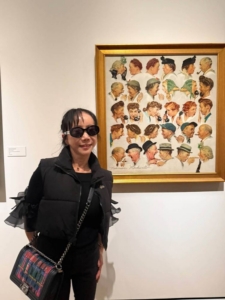
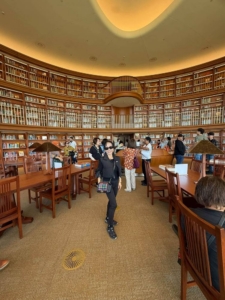
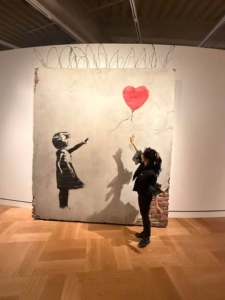
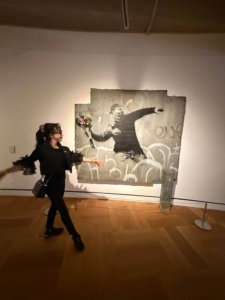
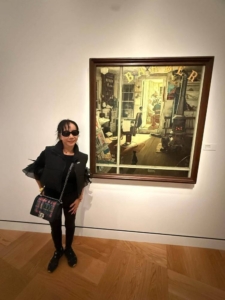
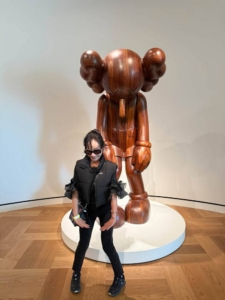
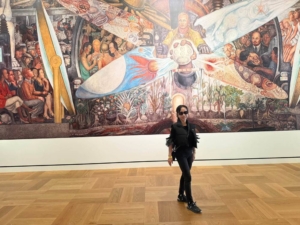
전시실에는 또 다른 세계가 펼쳐졌다. 디에고 리베라, 뱅크시, 무라카미 다카시 등 익숙한 작가와 이미지도 반가웠지만 생소한 작품도 많았다. 평소 쉽게 만나지 못했던 만화와 일러스트레이션, 영화 속 이미지, 회화와 조각이 어우러져 있었다. 유명한 작품을 알아보는 즐거움보다 낯선 작품을 발견하는 기쁨이 더 컸다.
루카스 뮤지엄이 추구하는 것은 내러티브 아트, 즉 이야기를 전달하는 예술이다. 그림 한 장, 만화 한 컷에도 시대의 문화와 감정이 담겨 있다. 무용 역시 몸의 움직임으로 이야기를 전달한다. 예술은 보이는 것을 재현하는 데 그치지 않고 보이지 않는 감정과 기억, 인간의 삶을 저마다의 언어로 형상화한다. 표현 방식은 달라도 예술의 본질은 연결되어 있다.
하루 종일 둘러보아도 시간이 부족할 만큼 볼거리와 배울 것이 넘쳐났다. 다만 입장료와 주차비를 생각하면 누구나 부담 없이 찾기에는 다소 아쉬움이 남는다. 이처럼 훌륭한 예술 공간이 더 많은 시민에게 열려 있어, 누구나 일상 속에서 예술을 가까이할 수 있기를 바란다.
미술사를 오래 공부했지만 알면 알수록 모르는 것이 얼마나 많은지 깨닫는다. 작품 하나를 알면 또 다른 궁금증이 생기고, 새로운 작가를 만나면 더 깊이 공부하고 싶어진다.
10년 넘게 예술이라는 가랑비를 맞으며 많은 것을 배웠다고 생각했지만, 모르는 세계는 끝없이 펼쳐져 있다. 그러나 이제는 그 모름마저 설렘이 된다. 배움은 눈을 열어 주고, 상상력은 그 너머의 세계로 우리를 이끈다. 오늘도 나는 끝없는 예술의 세계에서 또 하나의 춤을 꿈꾼다.
The Lucas Museum: In the Gentle Rain of Art
Jean Choi’s Dance Stories
“A gentle rain soaks your clothes before you realize it.”
Our Western art history instructor at KAWA, the Korean American Women’s Association, often shares this Korean saying with us. Learning unfolds in much the same way. Its influence is quiet, almost imperceptible, until one day we discover how deeply it has entered our lives. For more than a decade, we have come to know art one painting, one artist at a time. Somewhere along the way, without quite noticing when, we became thoroughly steeped in its gentle rain.
Last week, I joined 27 members of our KAWA Western art history class for a visit to the newly opened Lucas Museum in Los Angeles. These are thoughtful, knowledgeable women who have spent more than ten years exploring the currents of Western art and becoming acquainted with countless works. They have grown into seasoned viewers, able to stand before a painting and speak naturally about its artist and the world from which it emerged.
The prospect of discovering an intriguing new museum in our city filled us with anticipation. Perhaps it was the pleasure of going with people who shared the same curiosity, but I even canceled my ballet class to accompany them. I felt the unmistakable excitement of a child setting off on a school outing.
Knowing that the museum was founded by George Lucas, the creator of Star Wars, I had imagined that its exhibitions would revolve largely around cinema. The moment we arrived, however, my expectations gave way to wonder. Before we had encountered a single work inside, the building itself stood before us as a work of art—a vast spacecraft that seemed to have gently settled upon the earth.
Its flowing curves reminded me of Seoul’s Dongdaemun Design Plaza, or DDP. The connection was more than a visual resemblance. Ma Yansong, the Chinese-born architect who designed the Lucas Museum, had trained under Zaha Hadid, the architect behind DDP, and worked in her practice.
Before our visit to the galleries, architect Edwin Cho, who had worked with the museum’s design team, introduced us to the building and the ideas that shaped it. Learning that he was the son of one of our members lent the occasion a special warmth. Through that personal connection, the architecture felt a little closer to our own lives.
I was particularly struck by the opening to the sky at the heart of the building. Our art history instructor reminded us of the oculus—the circular opening in the dome of the ancient Pantheon in Rome—and explained that red rose petals are released through it each year on Pentecost.
I looked upward again, and my imagination began to stir. Might flowers someday descend through this opening, too? Could a performance unfold beneath that open sky?
In that instant, I pictured myself dancing ballet beneath a shower of petals. There was no music yet, no stage, and still the dance had already begun within me.
Perhaps this is where art begins: in sensing a beauty that does not yet exist before our eyes, then giving it form in the world. The architecture had awakened movement within me. Its curves and open spaces had become the first, unspoken suggestions of a new dance.
Inside the galleries, another world awaited.
It was a pleasure to encounter familiar names and images—Diego Rivera, Banksy, Takashi Murakami—but there was also so much I did not know. Comics and illustrations, cinematic imagery, paintings and sculptures appeared together, inviting us to move among forms of expression we do not always encounter side by side.
The pleasure of recognizing a familiar work was surpassed by the joy of discovering an unfamiliar one.
At the heart of the Lucas Museum is narrative art: art that tells a story. A single painting or a single panel of a comic can hold the emotions of an age and the traces of a culture. Dance, too, tells stories, giving them shape through the movement of the human body.
Art does more than reproduce the visible world. It gives form to what cannot readily be seen—to feeling, memory, and the inward experience of being human. Each art speaks in its own language, yet something essential passes between them. Standing among these works, I felt that kinship with the language I have spent my life learning: dance.
There was so much to see and learn that even an entire day seemed insufficient. Yet the cost of admission and parking left me wishing that a visit could be more easily within everyone’s reach. My hope is that an artistic space of such richness will be accessible to a wider public, allowing more people to encounter art as a natural part of everyday life.
Although I have studied art history for many years, the more I learn, the more aware I become of all that remains unknown to me. Every work I begin to understand opens another question. Every new artist I encounter awakens a desire to look further, to read more, to deepen my understanding.
After more than a decade in the gentle rain of art, I thought I had absorbed a great deal. And I have. Yet beyond everything I have learned, unfamiliar worlds continue to unfold.
Now, even that unknowing fills me with anticipation.
Learning opens our eyes. Imagination carries us beyond what they can see.
And today, once again, in the boundless world of art, I find myself dreaming of another dance.